

What is the Dutch Reformed Tradition?
The historic, confessional roots of our living faith at Oceanside United Reformed Church in Carlsbad & Oceanside
“Dad, who are these guys?”
Pastor Danny still remembers the question, and his father’s answer, as if it were yesterday. He was a senior in high school and a brand-new Christian, sitting at the dining room table on a Sunday evening doing homework with the radio on. Like every earnest young believer in his corner of Southern California, he had it tuned to the big Christian station in Los Angeles. A program came on that opened, strangely, with the sound of hoofbeats and the words, "Welcome to the White Horse Inn." He had no idea what the four hosts were talking about. As a convert during the 1970s Jesus Movement in SoCal, his dad thought he did: “Oh, those are a bunch of Lutherans.”
It turned out only one of them actually was. The others included a Baptist and two men who were something called “Reformed”—a word the young Danny Hyde had no category for. In the churches where he was converted, and later served as a youth pastor, you were either a “Bible-believing, Spirit-filled” Christian or you were “Catholic.” That was the whole map. "Reformed" wasn't on it.
A few years later, to the surprise of some family and friends, he became one of “them.”
We tell that story first because it says something important about our church. You don’t need a Dutch last name, or a Reformed childhood, to belong here. Almost all of us came from somewhere else. The Dutch Reformed tradition isn’t an ethnic club; it’s a way of reading the Bible, worshiping God, and living the Christian life that has been handed down, tested, and treasured for centuries—and it’s open to anyone who wants to explore it.
So: what is it?
Roots: Where the Reformed Churches Came From
Reformed churches didn’t appear out of nowhere. The simplest way to say what we are is in three words: Christian, Protestant, and Reformed.
Christian
We are Christian because we trace our roots to the early church of the centuries just after the apostles. With believers in every time and place, we receive the Bible as the Word of God and confess the ancient creeds—the Apostles', Nicene, and Athanasian Creeds, together with the Definition of Chalcedon. In the words of Vincent of Lérins, we hold "that faith which has been believed everywhere, always, by all."
Protestant
We are Protestant because, along with the Lutheran churches, we trace our roots from the ancient church through the medieval crises that led to the sixteenth-century Reformation. With the Reformers, we confess that Scripture alone is our final authority and that Jesus Christ—not any man—is the Head of His church. Sinners are saved from God's wrath by grace alone, received through faith alone, resting in Christ alone.
Reformed
We are Reformed because we belong to a particular family within Protestantism—the churches “reformed according to the Word of God.” Reformed churches spread across sixteenth-century Europe: through Switzerland under Zwingli, Bullinger, and Calvin; into France, Hungary, Germany, England, Scotland, and Poland; and, most importantly for us, into the Netherlands.
It’s from the Dutch churches that our particular stream flows. These Reformed churches on the European continent gathered their beliefs into three documents known as the Three Forms of Unity. That confessional inheritance—Dutch in origin, biblical in substance—is what makes Oceanside United Reformed Church what it is today.
For a deep-dive into Reformation history and theology, see Pastor Danny’s Logos article, What is Reformed Theology: Its Roots, Core Beliefs & Key Leaders.
For a fuller story of how the Dutch Reformed tradition crossed the ocean and took root in America, see Pastor Danny's article for Tabletalk magazine, The Dutch Reformed in North America.
The Three Forms of Unity
Every Christian says they believe the Bible. The real question is: what do they believe the Bible teaches? Reformed churches answer that question openly, in public documents anyone can read and hold us to. Ours are the three "forms of unity"—three statements (formulae) of what we believe, meant to unite us in one heart, soul, and mind.
The Belgic Confession (1561)
Written by Guido de Brès, a Reformed pastor in the persecuted churches of the Low Countries who would later die for his faith. He wrote it to show a hostile king that the Reformed were not rebels but faithful Christians holding the ancient faith. It walks, article by article, through what we believe about God, humanity, Christ, salvation, the church, and the end of all things.
For an historical and theological commentary on this confession and its application today, see Pastor Danny's book, With Heart and Mouth: An Exposition of the Belgic Confession.
The Heidelberg Catechism (1563)
The warmest and most beloved catechism of the Reformation, written in Heidelberg to teach children, people in the pew, and pastors the Christian faith through question and answer. It opens with one of the most comforting lines in all of Christian literature: “What is your only comfort in life and in death? That I am not my own, but belong—body and soul, in life and in death—to my faithful Savior, Jesus Christ.” Its structure follows the flow of the letter to the Romans—our guilt, God's grace, and our gratitude.
For a series of sermons on this catechism, see Pastor Danny's messages here.
The Canons of Dort (1618–19)
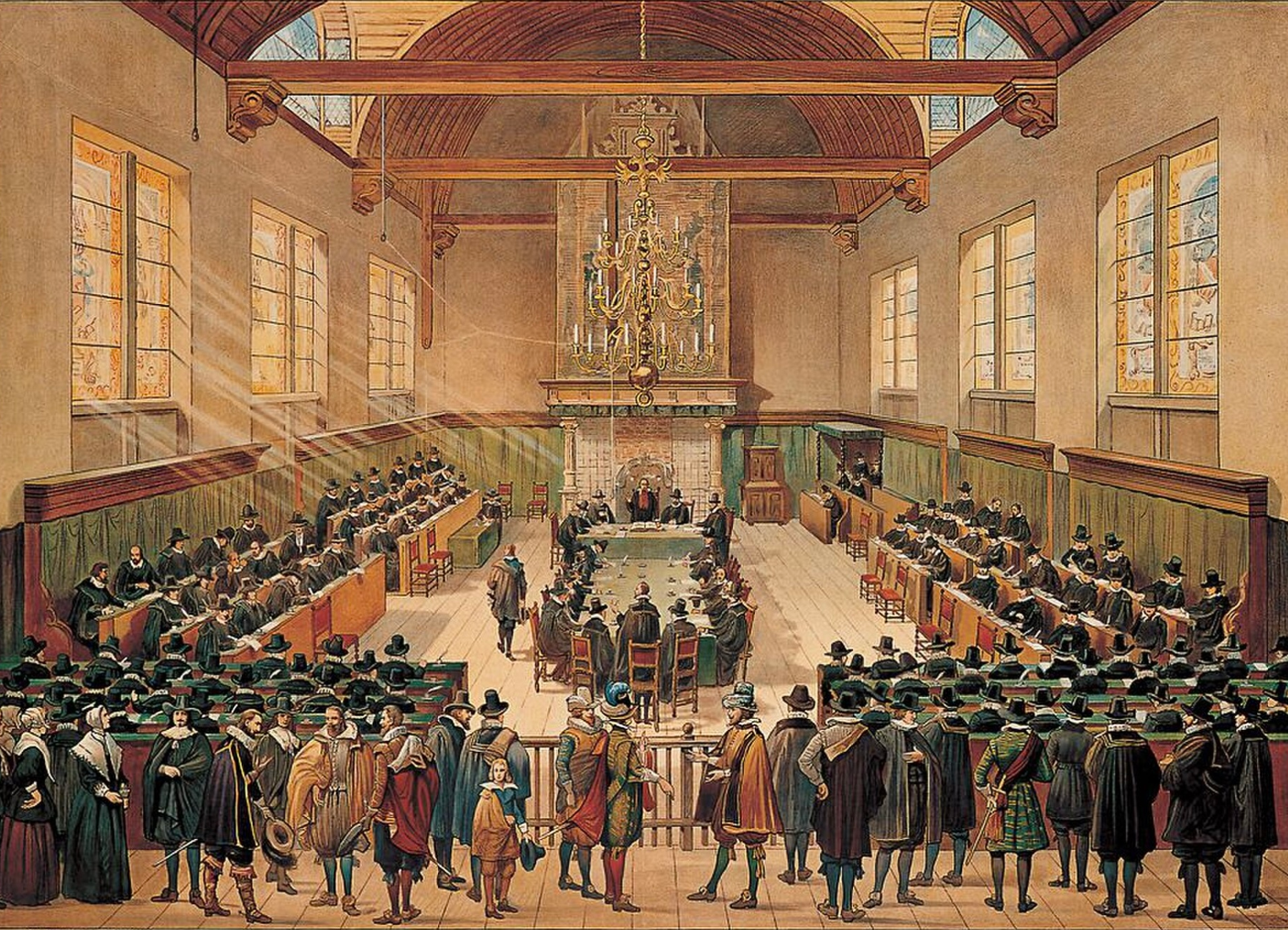
Written at the international Synod of Dort in the Dutch city of Dordrecht, where Reformed delegates from across Europe gathered to answer a controversy over grace and salvation. The Canons confess that salvation is God's work from first to last—the truths popularly summarized as the “five points.” They were never meant to sum up the whole faith; the Belgic Confession and Heidelberg Catechism already did that. They were written to guard the gospel of grace.
For an historical and theological commentary on these canons and their application today, see Pastor Danny's book, Grace Worth Fighting For: Recapturing the Vision of God’s Grace in the Canons of Dort.
For a series of sermons on these canons, see Pastor Danny's messages here.
Together, these three form the doctrinal foundation you'll hear in our preaching, teaching our children, and communal prayers. You can read more about what we believe here.
How the Tradition Comes to Life
A confession that stays on paper isn't worth much. The Dutch Reformed tradition is meant to be lived—starting with the Lord's Day and into all of life. In the famous words of Abraham Kuyper:
“There is not a square inch in the whole domain of our human existence over which Christ, who is Sovereign over all, does not cry: ‘Mine!” (Abraham Kuyper: A Centennial Reader, 488).
Liturgy (worship)
Our liturgy or service of worship is simple, reverent, and saturated in Scripture. One writer described it as “scriptural purity and beauty” (Charles W. Baird, A Chapter on Liturgies: Historical Sketches, 216).
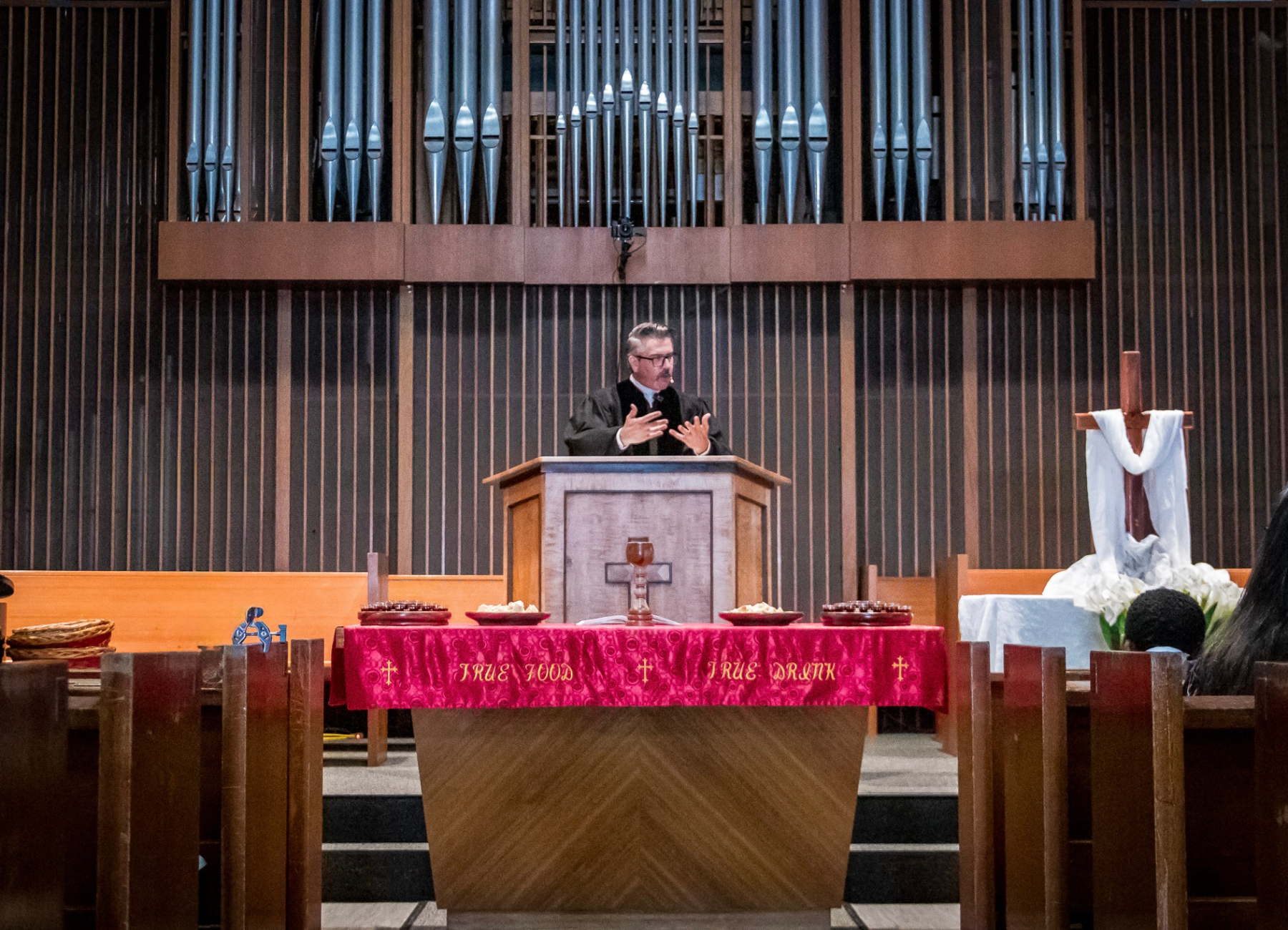
We gather around the Word of God. We hear it read and preached. We pray the Word. We sing the Word, especially emphasizing the biblical psalms in our singing. And yes, we sing out of an old school, physical hymnal that children to grandparents can hold! We experience the Word with our sense in the sacraments of baptism and communion. In our congregation, we celebrate communion every Sunday. One of the hallmarks of an historic, confessional Dutch Reformed church is that we still use our Reformation-era liturgical “forms” and prayers.
Nothing is designed to entertain; there is an audience of only one, after all—God! Everything is designed to bring us into the presence of the God to meet with him, hear his voice, and adore his grace.
Polity (church government)
Our church government (polity) also grows out of this tradition. Reformed churches are governed not by a single charismatic leader but by a plurality of elders, accountable to one another locally, then in ever-widening circles of fellowship—regionally in Classis Southwest U.S. and internationally in the United Reformed Churches in North America.
As with our confessions and liturgy, we still use what is called a “church order” that was developed in the Reformation and codified at the Synod of Dort. The church order explains the purpose and tasks of the three offices: ministers, elders, and deacons. It explains the purpose and authority of the three assemblies: consistory (local pastors and elders), classis (regional), and synod (international). It also explains basics of liturgy and church discipline.
The purpose of all this structure is “for the sake of the purity of doctrine and the holiness of life” (Church Order, “Introduction”). A well-thought out church government protects the flock and keeps Christ, through His Word, at the center.
Piety (Christian living)
The Christian faith isn’t meant to stay inside church walls on Sundays. The Dutch Reformed tradition has always insisted that the grace we receive in Christ reshapes every ordinary Monday. As John Calvin put it, “We are not our own…we are God’s; to him, then, as the only legitimate end, let every part of our life be directed.”
This flows directly from the comfort that we “belong to…Jesus Christ.” All of life, body and soul, belongs to him because he’s redeemed it all.
The Reformed churches have never been content with mere “head knowledge,” although we’re teased as the “frozen chosen.” Reformed Christianity is a religion of head and heart. More than one-third of the Heidelberg Catechism is devoted to holy living. Sound doctrine becomes heartfelt devotion; theology must become biography.
As the Heidelberg Catechism unfolds the Christian life, it does so in three movements: guilt, grace, and gratitude. It’s no accident that the catechism places the Ten Commandments and Lord’s Prayer at the end, after all it’s said about our sin and our salvation. Obedience isn’t how we earn God’s favor, but how we say “thank you” for it. Dutch Reformed Christianity is a life of gratitude, not guilt.
Because we belong to Christ, we go to school, to work, and into our neighborhoods to serve him. Our labor, our learning, and our care for our community are themselves acts of worship, done coram Deo—before the face of God. We long for the next generation to see that Christ is Lord not only of the sanctuary but of the classroom, the workplace, and the home.
One of the simplest and oldest ways this piety comes home is in daily devotions—whether you’re single, a couple, or a family gathered at the table. We open the Word, we pray, and we teach our children the faith. If you’ve never done this, or aren’t sure where to begin, you don’t have to invent it from scratch; the historic Reformed churches have handed down simple, time-tested forms of Scripture reading and prayer to guide you. You can find a helpful collection at FormsAndPrayers.com.
Come and See
We know that stepping into an unfamiliar church can bring both excitement and anxiety. We've been there—most of us walked in as newcomers ourselves, with no Dutch heritage and plenty of questions about this “Reformed” thing. You’re welcome exactly as you are.
If you're searching for a historic expression of the Christian faith, rooted in the ancient creeds and Reformation confessions, with a reverent, Christ-centered liturgy, and church government structure intended for maximum accountability and not celebrity pastor culture, we'd love to welcome you and meet you. If you’re in Carlsbad, Oceanside, or anywhere in North County San Diego, join us!
New to church, or haven't been in a while? Here's a little What to Expect to make your first visit more comfortable.
Check our Sunday schedule of service times.
Curious to go deeper? Ask Pastor Danny about his next Welcome to a Reformed Church Class—and when you visit, we'll give you a free copy of his book Welcome to a Reformed Church: A Guide for Pilgrims.
The Lord be with you.