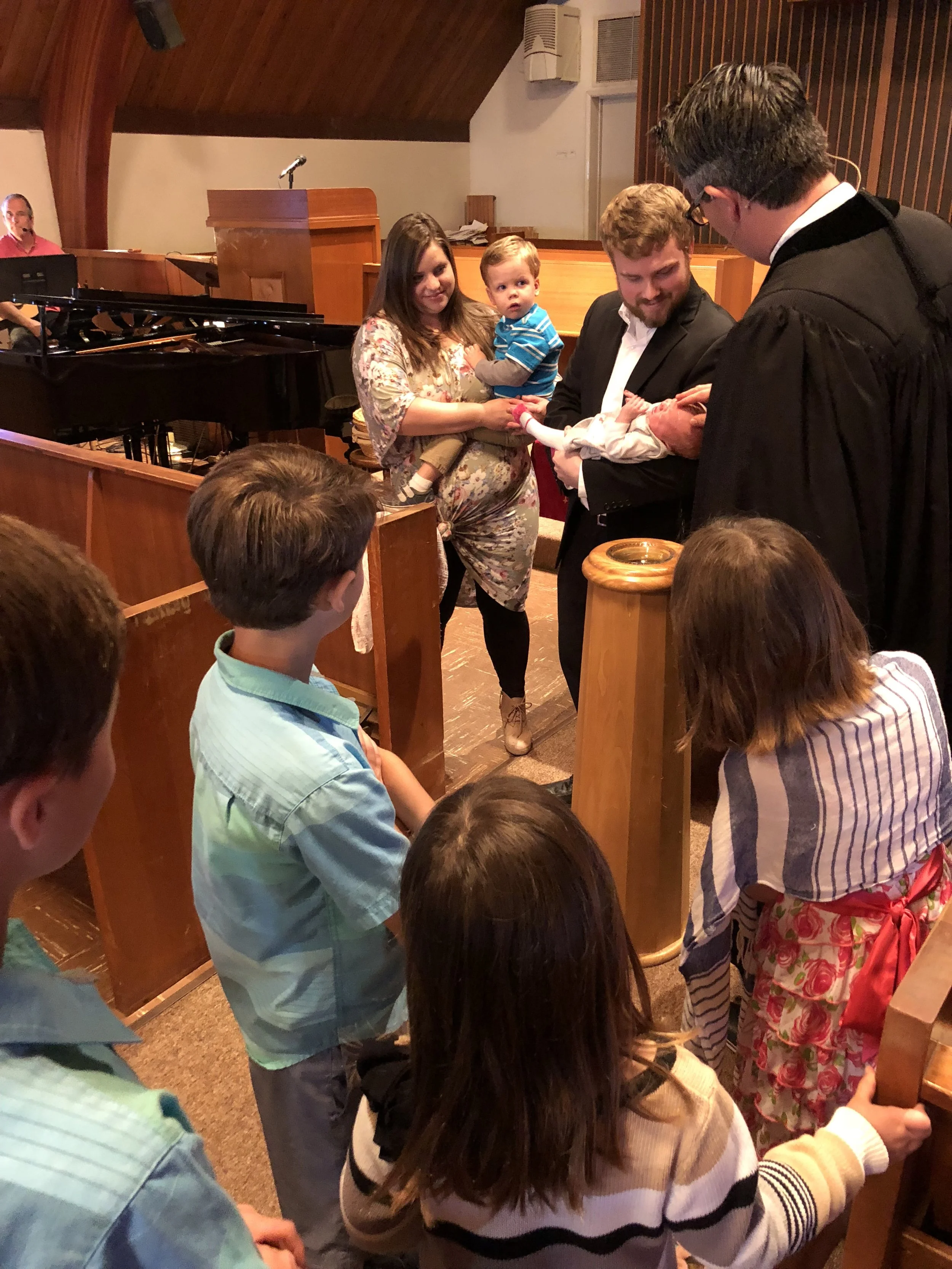
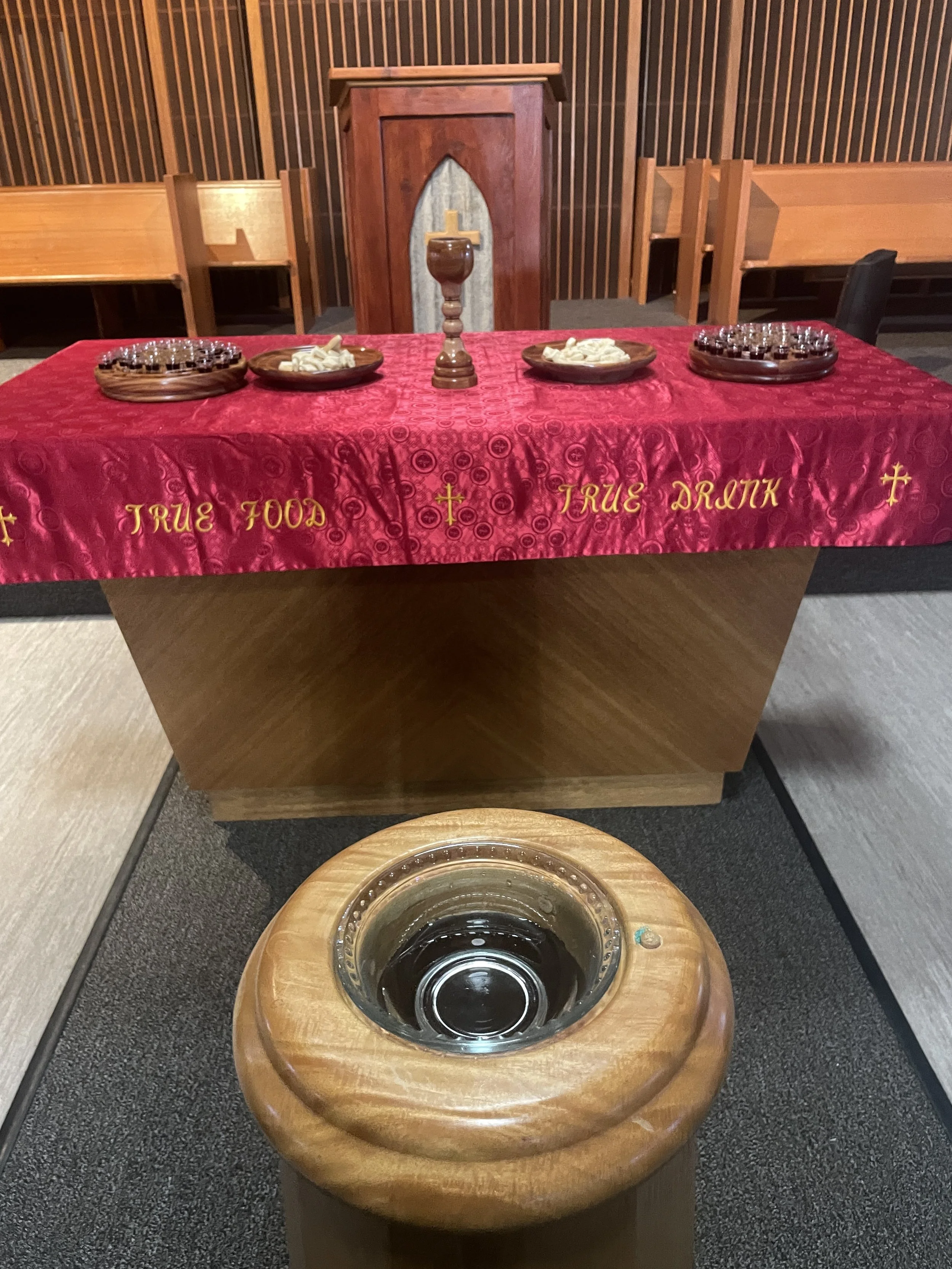
Baptism: What It Means and Who Should Be Baptized
Dr. Daniel R. Hyde, pastor of Oceanside United Reformed Church and author of Jesus Loves the Little Children.
In Brief
If you’re exploring Christianity for the first time, returning to the church after years away, or somewhere in between, you may have questions about baptism. We’re glad you’re asking.
What does baptism mean?
Who should be baptized?
What about children—should babies be baptized, or only those old enough to profess faith? (infant baptism vs. believer’s baptism)
At Oceanside United Reformed Church (OURC), we believe Jesus gave baptism to his church as a sacred sign and seal. As a sign, it points to the forgiveness of sins, being joined to Jesus (union with Christ), and belonging to God’s covenant people (the church). As a seal, it assures us of these realities.
We recognize that the waters of baptism sadly divide Christians, even among Protestants. Some churches baptize only professing believers. Others practice infant baptism with the children of believers. In the Reformed tradition, we take Scripture’s teaching about God’s covenant—his committed relationship and promises to his people—seriously, and that shapes how we baptize.
In short, we baptize:
Converts to Christ (those who profess faith)
Children of Believers (infants and children of at least one believing parent)
If you’re not persuaded about infant baptism—you are still welcome here. We invite your questions and want to earn your trust through clear teaching and patient conversation.
What Is Baptism?
To learn about baptism in the Bible, we can turn to Jesus’ Great Commission. After he arose victoriously from the grave, he said:
All authority in heaven and on earth has been given to me. Go therefore and make disciples of all nations, baptizing them in the name of the Father and of the Son and of the Holy Spirit, teaching them to observe all that I have commanded you. And behold, I am with you always, to the end of the age (Matt. 28:18–20).
As a historic Christian church, we call baptism a “sacrament.” This means it is a “visible, holy sign and seal” (Heidelberg Catechism, Q&A 66). The visible sign of baptism is water. God uses water to “make us understand more clearly the promise of the gospel” (Heidelberg Catechism, Q&A 66), meaning: forgiveness of sins, renewal of the Holy Spirit, and belonging to his covenant family—the public community of Christ’s people on earth. The seal (meaning, assurance) of baptism is that this promise is for me: “as surely as water washes away the dirt from the body, so certainly his blood and his Spirit wash away my soul’s impurity, that is, all my sins” (Heidelberg Catechism, Q&A 69).
As one of our baptism forms says, God uses water to signify and seal:
The washing away of our sin by the blood of Christ (Acts 2:38; 22:16)
The renewal of our lives by the outpouring of the Holy Spirit (Titus 3:5)
That we are buried with Christ, thus, our sin has been condemned by God (Rom. 6:4)
That we are raised with Christ to walk with him in newness of life (Rom. 6:4; Col. 2:12)
In the Old Testament, the sign of belonging was circumcision (Gen. 17:9–14); now it’s baptism (Col. 2:11–12). Back then it was given only to male children on the eighth day of life and to adult male converts; now it’s administered to allbelievers and their children.
Two clarifications matter:
Baptism does not save by itself. Water does not change into Christ’s blood or the Holy Spirit, who alone changes our hearts. The water is the sign of these things meant to assure (seal) that God saves by grace alone through faith alone.
Baptism does matter. In a Reformed church, we never say of baptism, “it’s just a symbol.” As our Confession of faith states: “they are not empty and hollow signs…for their truth is Jesus Christ, without whom they would be nothing” (Belgic Confession, art. 33). Jesus commands baptism for his disciples; ministers of the church are called to administer it faithfully.
Who Should Be Baptized?
Because baptism is all about Jesus (he is the truth of it), we long that everyone would be baptized—males and females, black and white, rich and poor. But not everyone should be baptized since it is a holy sign of belonging to Christ and his church.
Here is what we believe about the proper subjects of baptism.
Converts to Christ
Because baptism marks belonging to Christ and his church, those who come to faith in Jesus—turning from sin and trusting him—should be baptized. This is a point not under dispute by historic, “catholic” (universal) Christianity.
This is clear from Jesus’ command in Matthew 28 and from the account of the early spread of the gospel in Acts: the gospel is preached, people repent and believe, and they are baptized:
The crowd at Pentecost heard Peter’s preaching, were “cut to the heart” (convicted), asked what to do, and the apostle said, “repent and be baptized” (Acts 2:37–38)
Lydia heard the gospel, the Lord opened her heart, and she was baptized (Acts 16:11–15)
The Philippian jailer heard the word of the Lord, asked what to do, the apostles said “believe,” then he and his household were “baptized at once” (Acts 16:25–34)
We never read in the New Testament of one convert who refuses to be baptized.
If you are exploring Christianity for the first time, we will never pressure you into believing or being baptized. But we will gladly share the gospel with you and talk about what it means to follow Jesus, including being baptized. And if you have come to faith—whether recently or years ago—baptism is a step of public identification with Jesus and his church.
Children of Believers (Infant Baptism)
We also baptize babies. This is not because we assume all children of believers are already converted, but because Scripture consistently treats them as belonging to God’s people, the church.
Even Christians who disagree with infant baptism often share an instinct with us: our children are different from the children of the world and that’s why we raise them differently. We pray with them, teach them the gospel, bring them into the church’s life, and even sing with them: “Jesus Loves the Little Children” or “Jesus Loves Me.” Many churches express this instinct through baby dedication, and here's how dedication and infant baptism differ.
A simple way to say the theology behind this is:
· Since children of believers have belonged to the covenant people from the beginning of the Old Testament, through the life of Israel, and into the New Testament, God ordinarily works through believing households to include their children in his covenant promises.
You can see this thread throughout the Bible.
From the beginning of the Old Testament, we see that God works through family lines:
In the “mother promise,” God “put enmity between you [the serpent] and the woman and between your offspring[plural] and her offspring [plural]” (Gen. 3:15).
God made his covenant with Noah, and included his entire household in the Ark. Then we read: “I establish my covenant with you and your offspring after you” (Gen. 9:9).
God called Abraham and continued his covenant with his family: “I will establish my covenant between me and you and your offspring after you throughout their generations for an everlasting covenant, to be God to you and your offspring after you” (Gen. 17:7)
Through the life of Israel, children were not treated as outsiders to God’s people but were included in worship, instruction, and covenant life:
The Passover was celebrated by entire households (Ex. 12)
The Exodus included children (Ex. 12:37)
The Law included a command specifically addressed to children (Ex. 20:12)
Israel’s prophets spoke of their children being included in the blessings of the covenant: “All your children shall be taught by the Lord, and great shall be the peace of your children” (Isa. 54:13)
In the New Testament, children continue to be included in the life of the church:
Jesus welcomed children, said they belonged to his kingdom, and rebuked the impulse to treat them as insignificant (Matt. 19:14; Mark 10:14–16; Luke 18:15–17)
Peter declared: “The promise is for you and for your children…” (Acts 2:39)
Paul addressed children directly as part of the church’s instruction and life, quoting the fifth commandment (Eph. 6:1–4; Col. 3:20)
Paul even spoke of children in a believing household as “holy” in the sense of being set apart within the covenant community (1 Cor. 7:14)
When a Christian parent brings a child for baptism, the church is saying:
God has set this child apart as a member of a home where his name is professed
God’s covenant promises are offered to this child
The church receives this child as part of the visible community and commits to support the parents in discipleship
Parents take vows to raise the child in the faith, teaching the gospel and calling the child to personal trust in Christ
One way to see this continuity is that neither Jesus nor the apostles revoked the Old Testament practice of including believers’ children among the people of God. The New Testament is explicit about several major changes with the coming of Christ:
Circumcision is no longer required of Gentile converts (Gal. 5)
Animal sacrifices are done away with because of Jesus’ final sacrifice (Heb. 10)
Kosher dietary laws no longer apply to the members of the church because Jesus cleanses people from every tribe, tongue, language and nation and has declared all food good (Mark 7; Acts 10–11; 1 Tim. 4)
The temple is no longer the central meeting place between God and his people but is replaced by a “living temple” made up of people (Eph. 2; 1 Peter 2)
But children are never said to be treated differently in the New Testament from the way they were in the Old; children are never said to be treated as outside the covenant community of Christ unlike Israelite children.
Baptism for them, then, is a sign of God’s promise and the child’s covenant belonging—alongside an ongoing call to repentance and faith as the child grows.
This is a big topic with lots of passions on both sides. So, I heartily encourage you to take a deeper dive into my little book: Jesus Loves the Little Children: Why We Baptize Children.
If You’re Unsure About Infant Baptism
We understand why many thoughtful Christians have questions here. If you come from a tradition that practices believer’s baptism only (sometimes called “credobaptism”), we want to be transparent about what we believe and why—without caricature or pressure.
Many sincere Christians disagree on this, and we respect that. But here are a few brief responses to common concerns and objections:
“Children can’t repent and believe, so they shouldn’t be baptized.”
While Acts does not address the issue of children as directly as we might want, it does so indirectly with entire households baptized. This shows God working covenantally through households and how believers’ children are part of the church’s visible community.
“She was baptized, and her household as well” (Acts 16:15).
“He was baptized at once, he and all his family” (Acts 16:33).
“He rejoiced along with his entire household that he [singular] had believed in God” (Acts 16:34).
Baptizing children is not a claim that they already have saving faith; it is placing the sign of God’s gospel promise upon them and calling them, as they mature, to embrace Christ personally.
“Isn’t the New Testament pattern ‘believe, then be baptized’?”
Yes—for converts. The examples of baptism in the book of Acts are of converts being baptized in the missionary setting Jesus envisioned. For adult converts, repentance and faith are necessary prerequisites to baptism. Acts is a missionary document focused on the gospel going to new peoples and places. Acts also includes “household” language. Added to this is the broader teaching of Scripture about covenant life, which explains why the church has historically received believers and their children as belonging to the visible people of God.
“There is no example of a child being baptized in the New Testament”
In fact, there is no example of a child growing up in church and then being baptized as many of us have experienced. More importantly is the evidence that children of believing households have belonged to the covenant people since the beginning. A “household” in the Old Testament and in the Roman culture in which the church spread included everyone under a head of household. This meant those born into the house or brought into the house as a servant. Thus Abraham circumcised Isaac as well as Eliezer his servant (Gen. 17:27).
“Does Baptism actually replace circumcision?”
The outward sign changes from the old covenant to the new, but the covenant reality of God working through believing households continues. The New Testament connects covenant identity and baptism in ways that reflect continuity in God’s saving plan. See especially Colossians 2:11–12, which defines our being “circumcised with a circumcision made without hands” as our “having been buried with [Christ] in baptism.” Here are two helpful sermons on understanding this passage:
“What Happened to Me? I Was Circumcised” (2006 audio)
“Knowing Infant Baptism” (2025 audio; also video)
“Wasn’t circumcision a sign only of an external covenant made with Israel as a nation?”
In Romans 4:11, rabbi Saul-turned-apostle Paul speaks of Abraham: “He received the sign of circumcision as a seal of the righteousness that he had by faith while he was still uncircumcised” (Rom. 4:11). This means it was not merely a sign of ethnicity, but of the deepest spiritual blessings of the circumcision of the heart (Deut. 30:6; Rom. 2:28–29).
Next Steps at OURC
Ready to take the next step?
Exploring Christianity for the first time
Trusted in Jesus recently
Returning to the church after a long time away
Parenting a child and have sincere questions
Our “Grow” pathway on this site is designed to help you take clear next steps.
Who is Jesus? presents the gospel
Become a Christian describes what it means to repent and believe
Baptism is the public identification with Christ and his people
Join Our Family explains church membership for new believers and those transferring from another congregation
Serve shows how you can get involved and use your gifts in the church
If you’re considering baptism for the first time, the next steps are:
Meet with the pastor for a conversation: share how you’ve come to faith and get your questions answered
Plan a visit: Sunday schedule / What to expect / Directions
Join the next “Welcome to a Reformed Church” class
Prepare to be baptized in a worship service among our congregation
If you’re a parent who is not yet a part of our church family, but considering baptism for your child, typical next steps include:
Meet with the pastor for a conversation:
What baptism is (and is not)
Reviewing the vows/commitments made by parents
Identifying how the church will help you disciple your child
Perhaps you dedicated your child at another church, start with Baby Dedication or Infant Baptism?
Attend a “Welcome to a Reformed Church” class
Prepare for the baptism of your children in a worship service among our congregation
FAQ
Do I have to be baptized to be saved?
We are saved by grace alone through faith alone in Christ alone. Baptism does not save by itself, but Jesus commands baptism for converts as an act of public identification with him and his church. It’s not a matter of have to, but get to. Let’s chat.
What if I was baptized as a baby and later became a Christian?
In our tradition, we recognize infant baptism as a valid covenant sign. We would encourage you toward public profession of faith, discipleship, and church membership, and we’d be glad to discuss your story.
What if I was baptized in another church?
We recognize baptism in the name of the Father, Son, and Holy Spirit. If you’re unsure, talk with us—we can help you sort it out.
Can I have my child baptized if I’m not a Christian?
Baptism is ordinarily for those within the visible church: believers and their children. If you’re exploring faith, we’d love to talk first about the gospel and what it means to follow Christ.
What is the difference between infant baptism and believer’s baptism?
Infant baptism emphasizes God’s grace comes to the helpless and utterly dependent. This is shown in how the children of believing households are included in the visible covenant community. As a sacrament, baptism is God’s work. Believer’s baptism emphasizes baptism as a response of faith by a professing disciple.
Both views agree that baptism should be administered in obedience to Christ and should never be treated as a substitute for personal repentance and faith.
What's the difference between baby dedication and infant baptism?
The core difference between evangelical baby dedication and Reformed baby baptism is that dedication is an act of the parent(s) promising to raise a child in a Christian way, while baptism is the act of God (gospel) promising to include a child in his covenant community.
How do you baptize?
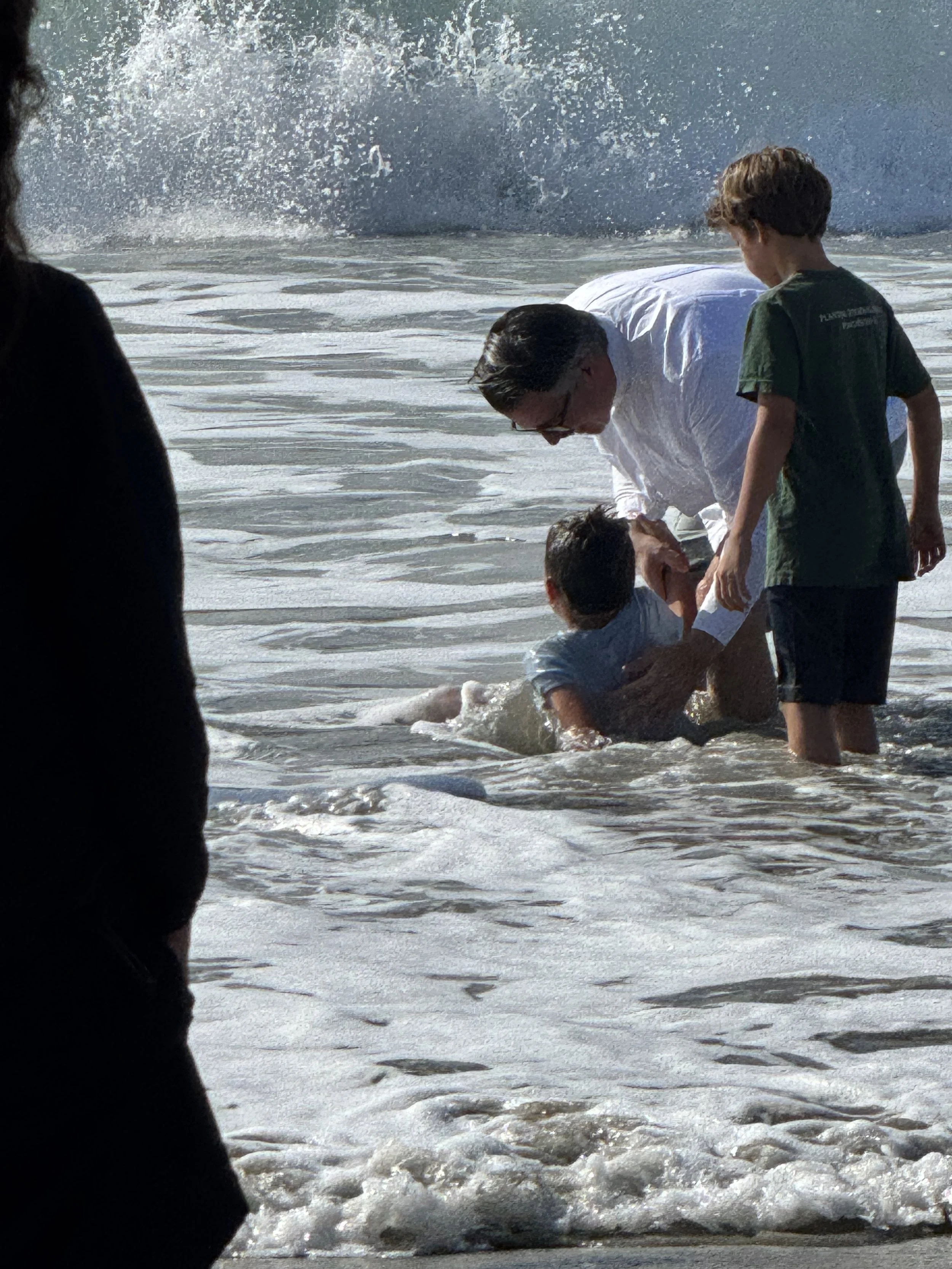
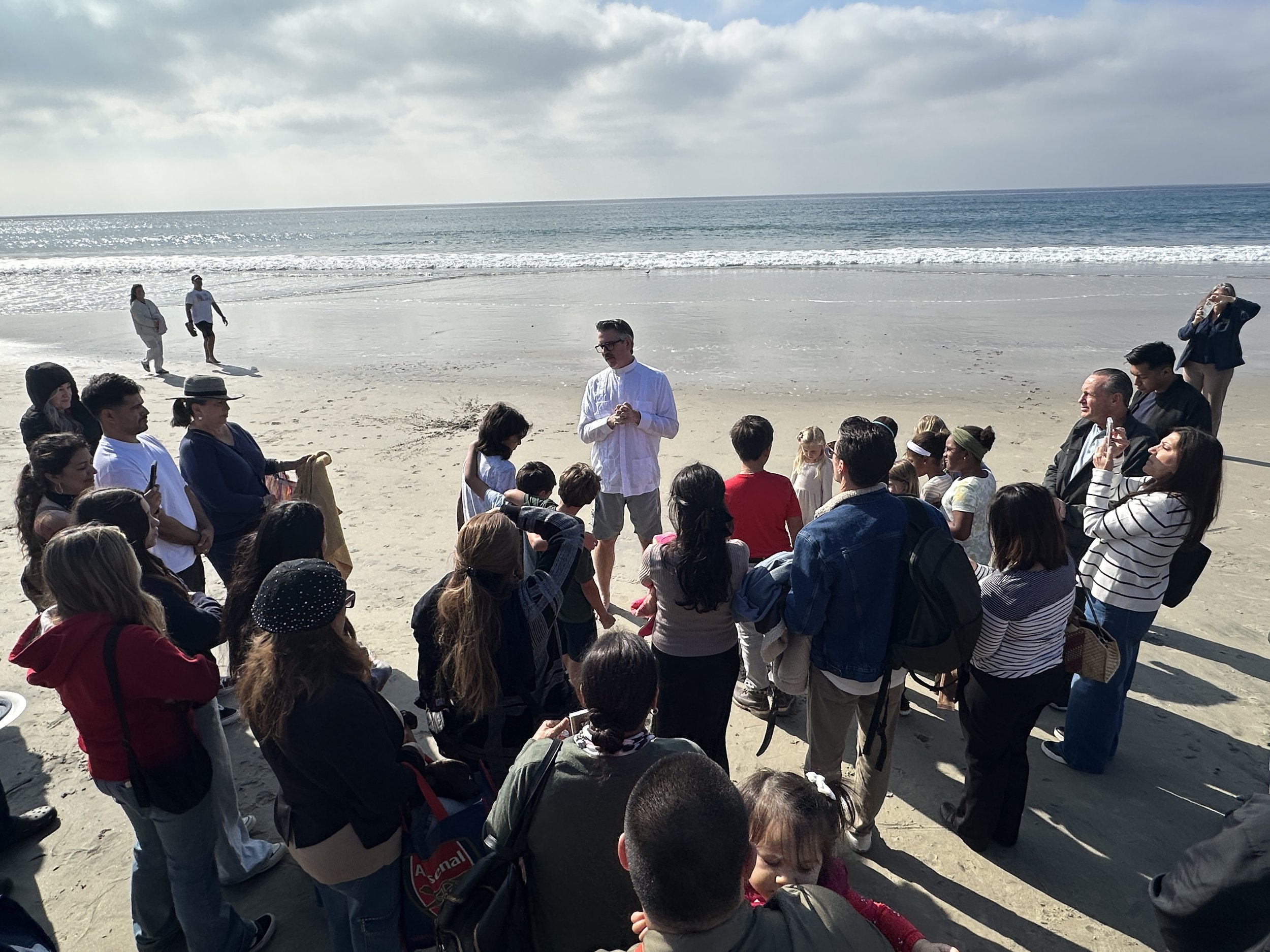
Many visitors wonder about the mode of baptism in a Reformed church like OURC. We consider this matter of secondary importance (what our forebears called adiaphora or “indifferent”). We believe baptism can be done in three valid ways: sprinkling, pouring, and immersing—even beach baptisms! What matters is the water and the Triune name of God—Father, Son, and Holy Spirit.