The Lord’s Day: A Reformed View of the Christian Sabbath
Why Christians Treat Sunday as a Holy Day and What That Means
Daniel R. Hyde (c) 2026
In Oceanside, Sunday doesn’t really feel different. Stores are open, youth sports run all day, and work emails keep coming. About the only thing that is different is Chick-fil-A being closed!
Why do many Christians—including the Oceanside United Reformed Church—still talk about Sunday as “the Lord’s Day,” and treat it as a holy day?
Our answer is simple: Sunday is set apart because Jesus Christ rose from the dead on the first day of the week. Christians do not all describe Sunday in the same way. This page explains the historic Reformed understanding as taught in the Heidelberg Catechism & Synod of Dort (more on those after we deal with the Bible). In our tradition, Sunday is the Christian Sabbath. The resurrection-centered day is not mainly about restriction. It is meant to be a weekly gift of worship, rest, and mercy—a rhythm that reorients life around what Christians believe is the most important event in history.
This page explains what Christians mean by “the Lord’s Day,” why Sunday became the ordinary day of Christian worship, and what Reformed Christians mean when they use the phrase “Christian Sabbath.”
In Brief
“Holy day” means set apart—treated as different because it belongs especially to the Lord not because the day is magically different.
“The Lord’s Day” is the Christian name for Sunday, tied to Jesus’ resurrection.
“Christian Sabbath” means the one-day-in-seven rhythm rooted in creation and God’s moral law is still observed, now on Sunday.
Reformed Christians believe the old covenant seventh-day Sabbath had a ceremonial form tied to Israel that reached its fulfillment in Christ.
So, Reformed Christians typically aim to use Sunday for corporate worship, rest from ordinary work, and acts of necessity and mercy.
Christians do not treat Sunday as a mere cultural custom; they treat it as a weekly pattern shaped by Christ’s resurrection and the New Testament church’s first-day gathering.

What Do Christians Mean by “the Lord’s Day”?
The New Testament uses the phrase “the Lord’s Day” (Rev. 1:10). Christians have long used it to refer to Sunday, the day especially associated with the risen Lord Jesus Christ and the gathered worship of the church.
Calling it “the Lord’s Day” is a way of saying: this day belongs to him in a particular way. It is not merely a cultural tradition or a personal preference. It is a weekly public marker that Christians belong to Jesus. Who is Jesus? He’s the risen Lord who’s given us new life so we seek to live in light of his victory.
If you are not a Christian, it may help to think of it like this: Christians believe time itself has been re-centered by the resurrection. A weekly day set apart is one way that belief takes visible shape.
From Sabbath to Sunday: The Bible’s Storyline
1. Creation: a built-in rhythm of work and rest
Christians see a weekly rhythm of work and rest woven into creation itself—before Israel, and before the Ten Commandments.
The Bible begins with a rhythm: six days of work and one day set apart. Genesis describes God completing his work and “resting.” Note that this language for God is used analogically so we can understand him. What does it mean that God “worked?” He created the heavens and the earth. What does it mean that he “rested?” He ceased creating and delighted in his work: “God saw everything that he had made, and behold, it was very good” (Gen. 1:31). The point is not that God was tired; it is that God completed and delighted in his work and then set apart a day to enjoy what he did (Gen. 2:3).
Reformed Christians call this a “creation ordinance”—a pattern God embedded into human life from the beginning for us to follow. The pattern looks like this:
Rule: As God ruled over creation, he called humanity to rule over creation (Gen. 1:26–28).
Work: As God worked in creation, he called humanity to work (Gen. 2:15).
Rest: As God “rested” after creating, he called humanity to rest (Gen. 2:2–3; Ex. 20:11, 31:17).
2. Israel: Sabbath as a covenant sign
When the Ten Commandments were later given, the fourth commandment grounds that weekly pattern in God’s own work and rest (Ex. 20:8–11). In fact, the command says, “he rested and was refreshed” (Ex. 31:17). This means he rejoiced and was satisfied: “May the Lord rejoice in his works” (Ps. 104:31).
In Israel’s old covenant life, the Sabbath took on significance as a covenant-sign that the Lord sanctified his people (Ex. 31:13). It marked Israel off from the nations and shaped their national worship and calendar every week and every year, for example, as the Day of Atonement fell on a Sabbath (Lev. 16:30–31). No matter where Israel was—wilderness, Promised Land, or exile in a foreign land—the Sabbath became a kind of temple in time; an oasis of hope.
Under this “old covenant” (Heb. 8:6, 7, 13), the Lord gave Israel detailed laws governing Sabbath observance—including serious penalties for intentionally treating the day as common (Ex. 31:14–15, 35:2). These regulations were God-given tutelage meant to lead Israel by the hand to Jesus Christ (Gal. 3:24).
3. Christ: fulfillment and New Covenant center of gravity
When Jesus rose from the dead on the first day of the week, everything changed.
Christ, the Second Adam, “finished” (John 19:30) the work that the first Adam failed to do (Rom. 5:12–19).
Jesus was the fulfillment of what the old covenant signposts anticipated. He is the final high priest who offered a once for all sacrifice in the heavenly temple thus ending the old covenant (Heb. 7:11–12, 18–19, 8:7, 13).
With Christ’s finished work, the ceremonial shadow gives way to the reality.
Reformed Christians distinguish two elements of the Old Testament Sabbath commandment:
Moral principle: God sets apart a regular day for worship and rest (a “one in seven” rhythm).
Ceremonial form: Israel’s seventh-day observance under the old covenant administration.
4. The Church: Sunday shaped by resurrection
Reformed Christians assert that Jesus’ resurrection on the first day of the week is why Christian worship and weekly life became oriented around Sunday. This is not arbitrary. At the resurrection, Christ was the first fruits of the final resurrection and restoration of all things (Rom. 8:18–25; 1 Cor. 15:23). Every Sunday, we are reminded of and participate in the glorious reality that we have already entered God’s Sabbath rest (Matt. 11:28; Heb. 4:3, 10). We also await the experience of the fullness of this rest in eternity in the new heavens and new earth (Rev. 21–22).
Sunday publicly announces new creation has begun while we await its fulness. Until then, we assemble corporately for worship to enjoy a foretaste of that ultimate rest. Until then, we go back into our ordinary callings in the world for six days.
From creation to Christ: God’s people worked six days and rested on the seventh, looking forward to the day of rest. This was typological of their looking forward to eternal rest.
From Christ to consummation: God’s people rest on the first day and work the next six, looking back on the finished work of Christ.
On the Lord’s Day our worship is a commemoration of Christ’s accomplished work and triumphant resurrection, a participation in the age to come already in this age, and an anticipation of the day of re-creation, when the Lord shall make all things new (Rev. 21:4–5).
Why Do Christians Worship on Sunday? Three Reasons Reformed Christians Give
Contrary to a common claim, Christians did not begin worshiping on Sunday because they adopted a pagan holiday under Constantine. The New Testament and earliest Christian sources associate Christian gathering and worship with the first day of the week.
Why do we worship Sunday, and not Saturday? Here are three reasons.
1. Resurrection declares a new beginning
Sunday is, above all, resurrection day. Christians gather because they believe Jesus is alive and reigning, and that his resurrection is the hinge of history (John 20:1). The Psalmist anticipated Christ’s resurrection: “This is the day that the Lord has made; let us rejoice and be glad in it” (Ps. 118:24).
2. The Lord’s own day
The New Testament’s calling Sunday “the Lord’s Day” (Rev. 1:10 cf. 1 Cor. 16:2) signals that the day is not simply “the weekend.” The church is also described gathering on “the first day of the week” (Acts 20:7). It is time that especially belongs to our Lord Jesus Christ. We intentionally return to the Lord in worship and gratitude what already belongs to him.
3. A new creation is coming
The first day of the week carries symbolic meaning. Christians believe Christ’s resurrection is the beginning of the new creation:
On the first day of creation, God made light and separated it from the darkness.
On the first day of the week of new creation, we gather to celebrate the light of the gospel in Jesus Christ. He has separated us from the darkness of sin (John 1:5, 9, 3:19, 8:12; 2 Cor. 4:1–6).
Our weekly gathering is a repeated act of hope: the world is being renewed.
Is Sunday “the Sabbath”? What Reformed Christians Mean by “Christian Sabbath”
Christians differ here, and it is worth stating plainly. Some still think Saturday is the Sabbath. Others treat Sunday as the primary day for worship without using “Sabbath” language. The Reformed tradition is more specific. By “Christian Sabbath,” Reformed Christians mean the continuing one-in-seven pattern now observed on the Lord’s Day.
Reformed Christians commonly say:
The fourth commandment contains a continuing moral element: God appoints a regular day for worship and rest.
The old covenant included a ceremonial element: Israel’s seventh-day form as a covenant sign in its particular administration.
With Christ’s fulfillment, the ceremonial element is no longer binding in the same way; the church affirms the continuing moral element on the Lord’s Day.
In short: the rhythm remains, the redemptive center shifts to Christ’s resurrection, and the day observed is Sunday.
What Christians Mean by “Rest”
When Christians talk about “rest,” they can mean more than taking a break. In Scripture, rest can be spiritual before it is practical. Hebrews 4 speaks about entering God’s rest—often understood in Reformed theology as resting from self-justifying works. That is, the believer stops trying to earn standing with God and instead relies on Christ’s finished work. In that sense, Christian rest is not passivity; it is faith—receiving what God provides rather than building a case for oneself.
But Christians also mean something very ordinary by rest: a weekly interruption of exertion. The Lord’s Day is meant to provide time for worship, refreshment, reflection, and fellowship—space where human value is not measured by output. Reformed Christians often emphasize that ceasing from ordinary labor and distractions is not a denial of joy; it is a way of making room for deeper joy: worship, mercy, and the kind of rest that a hurried life rarely permits. The Lord’s Day is meant to be received not only as duty, but as “delight” because the Lord himself is our joy (Isa. 58:13–14).
What Does Lord’s Day Keeping Look Like in Practice?
Reformed Christians ask less, “What can I get away with?” and more, “What is the day for?” It’s a heart matter.
Worship: the church gathered to hear God’s Word and pray.
Rest: stepping back from ordinary work and distractions.
Mercy: doing what love and necessity require.
Reformed Christians want to let the Lord’s Day structure us. Instead of seeing the Lord’s Day as a rule that stifles our “weekend,” we need to view it as a gift from God that actually structures our lives by providing a rhythm.
Here’s how those priorities typically take shape.
1. Corporate worship is central
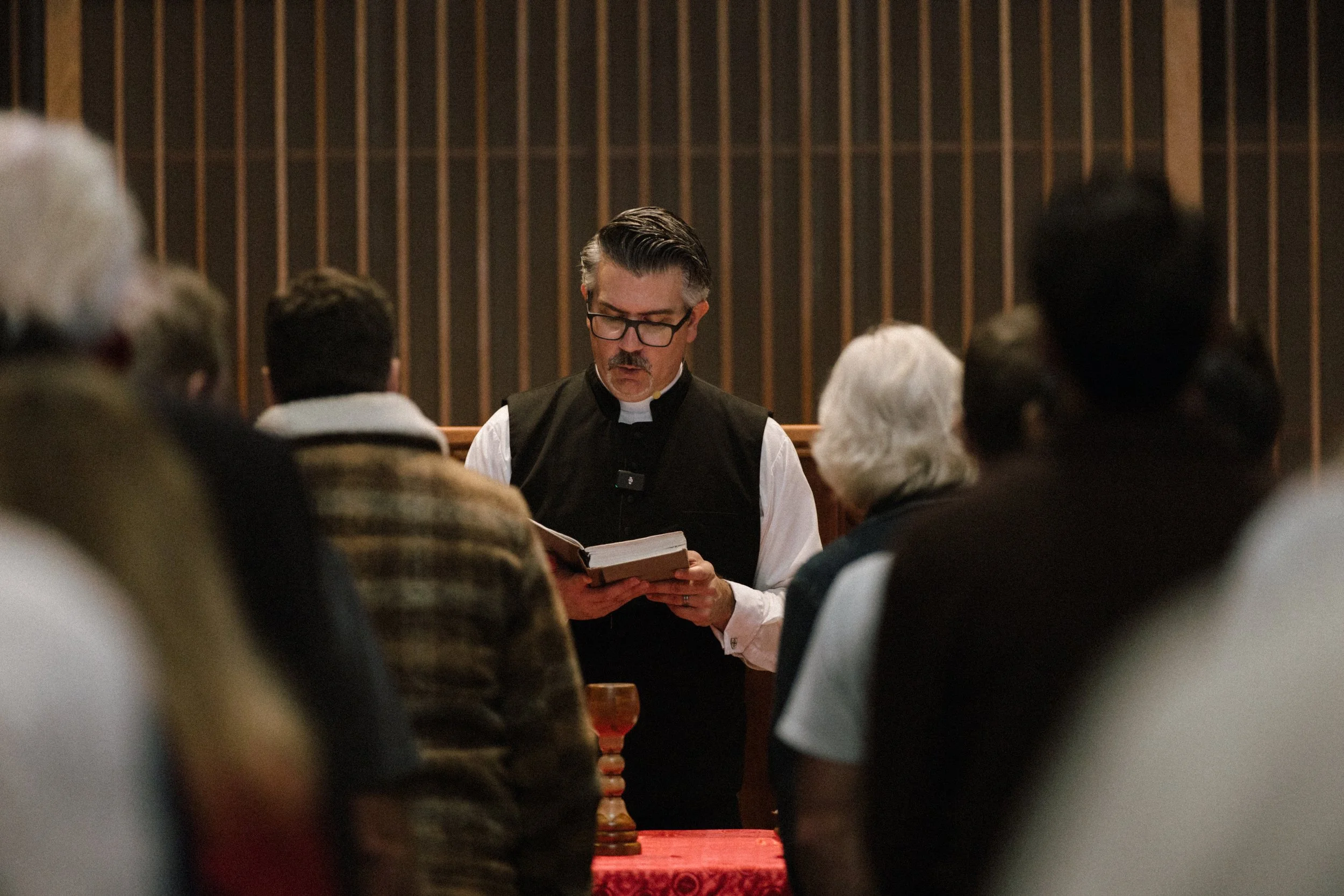
The heart of the day is the gathered worship of the church in its liturgy: hearing Scripture preached, praying, singing, and (when administered) receiving the sacraments. The day is designed to reorient people around God rather than around productivity or entertainment.
Reformed Christians often summarize this not as a checklist, but as a day oriented around God’s priorities:
In the first place, God wills that the ministry of the Gospel and schools be maintained, and that I, especially on the day of rest, diligently attend church to learn the Word of God, to use the Holy Sacraments, to call publicly upon the Lord, and to give Christian alms. (Heidelberg Catechism, Q&A 103)
Since Sunday is the Lord’s Day, it is his will for us that we diligently attend church, “not neglecting to meet together, as is the habit of some, but encouraging one another, and all the more as you see the Day drawing near” (Heb. 10:25). This diligence in anticipation of the final Day is seen in the early account of the church, which “devoted themselves to the apostles’ teaching and fellowship, to the breaking of bread and the prayers” (Acts 2:42).
2. Rest is real
Reformed Christians historically sought to rest from ordinary employment and from activities that compete with worship and undercut the day’s purpose. The aim is not grim minimalism; it is to make space for worship, spiritual reflection, fellowship, and actual rest. The aim is not a joyless vacuum; it is a festive kind of rest—room for worship, unhurried fellowship, and refreshment.
In Reformation churches like ours, we follow historic practice in our Sunday schedule: worshiping twice on the Lord’s Day since the pattern we see in Scripture is that the day of rest is structured at each end with morning and evening worship.
This Lord’s Day rest is a preview of where history is headed—the coming, unending rest of God’s kingdom.
3. Mercy and necessity still matter
Most Reformed teaching includes room for acts of necessity and mercy: caring for the sick, serving the vulnerable, and doing what genuinely must be done as acts of piety. The day is not meant to prevent love of neighbor; it is meant to cultivate it.
Summary: the Lord’s Day is the day in which the resurrected Jesus takes us to our Father and places us into his arms to minister to us by the Holy Spirit. He does this in spiritual worship, physical rest, and acts of mercy.
Practical Advice on Preparing for the Lord’s Day
Because Sunday is meant to be a gift of worship and rest, it’s worth planning for. This way, worship, rest, and mercy aren’t crowded out by the week’s leftovers.
Here are some simple ways to prepare so the day isn’t swallowed by unfinished tasks or digital noise.
Meals & errands: Do grocery runs, chores, and meal prep ahead of time so Sunday isn’t dominated by “catch-up” work.
Work boundaries: Clear (or at least triage) urgent emails and loose ends beforehand, and plan to keep Sunday free from routine work whenever possible.
Bedtime & pace: Choose a Saturday night rhythm that serves worship—rest well, and aim for a calm morning rather than a rushed scramble.
Family expectations: Talk through the day’s plan (worship, rest, fellowship, mercy) so everyone knows what the day is “for.”
Screens & distractions: Decide ahead of time what helps and what hinders—set limits on sports schedules, entertainment, and scrolling so the day has space to breathe.
How the Reformed Tradition Summarizes This
Historically, Reformed churches have often expressed the moral/ceremonial distinction of the fourth commandment and the shift to the Lord’s Day in confessional teaching and synodical statements. One classic Reformed summary is from the Synod of Dort (1618–19). Its “rules on the observation of the Sabbath” lay out some helpful parameters:
In the fourth Commandment of the divine law, part is ceremonial, part is moral.
The rest of the seventh day after creation was ceremonial and its rigid observation peculiarly prescribed to the Jewish people.
Moral in fact, because the fixed and enduring day of the worship of God is appointed, for as much rest as is necessary for the worship of God and holy meditation of him.
With the Sabbath of the Jews having been abrogated, the Lord’s Day is solemnly sanctified by Christians.
From the time of the Apostles this day was always observed in the ancient Catholic Church.
This same day is thus consecrated for divine worship, so that in it one might rest from all servile works (with these excepted, which are works of charity and pressing necessity) and from those recreations which impede the worship of God.
A Final Word for the Curious Reader
If you are not a Christian, you do not need to agree with these claims to understand them. The Reformed view of Sunday flows from one center: Christ’s resurrection changes what time means. A weekly holy day is one way Christians publicly embody that belief.
And for Reformed Christians, the Lord’s Day is not mainly a boundary. It is meant to be a gift: weekly worship, weekly rest, and a weekly rehearsal of hope.
We invite you to check out our Sunday schedule, get comfortable with what to expect, then find us and worship the risen King with us!
FAQ
Is Sunday worship just tradition, or does the Bible command it?
Reformed Christians do not treat Sunday worship as a merely human tradition. They argue that the New Testament associates the church’s regular gathering with the first day of the week because of Jesus’ resurrection. Jesus rose “on the first day of the week” (John 20:1), and the day came to be known as “the Lord’s Day” (Rev. 1:10). The early church is also described assembling “on the first day of the week” (Acts 20:7), and Paul assumes a first-day rhythm in the churches when he speaks of setting aside offerings “on the first day of every week” (1 Cor. 16:2).
For that reason, Reformed Christians see Sunday worship not as an accidental custom, but as the church’s ordinary, resurrection-shaped pattern—a weekly gathering to worship the risen Lord.
Is this just legalism with a new label?
Reformed Christians distinguish between earning God’s favor (which the gospel rejects) and receiving God’s gifts through faith (which the gospel produces). Lord’s Day keeping is not meant as a ladder into God’s love; it is meant as a weekly rhythm that flows from grace.
The practice of the Lord’s Day is not legalism, but it is a part of our piety, that is, our grateful response to God’s gifts. We sanctify the day because we belong not to this age that is passing away, but to the glorious age to come.
Do all Christians agree about Sunday being a “Christian Sabbath”?
No. Most Christians agree Sunday matters for worship, but they differ on whether Sunday should be treated as a Sabbath in a one-day-in-seven sense. This page presents the historic Reformed approach.
Is the Sabbath obsolete, optional, or even harmful?
Christians disagree about details, but the historic Reformed view is that the Sabbath is not obsolete and not harmful. It teaches a wise, humane rhythm God built into creation: one day in seven set apart for worship and rest. Reformed Christians also believe that the Old Testament’s seventh-day form included ceremonial features tied to Israel that were fulfilled in Christ. For that reason, the abiding “one-in-seven” principle is now ordinarily observed on the Lord’s Day, centered on Christ’s resurrection, as a weekly gift that reorders life around God’s grace rather than nonstop productivity.
Why Sunday instead of Saturday?
Reformed Christians argue that the old covenant seventh-day Sabbath had a ceremonial form tied to Israel’s covenant administration, and that Christian worship is oriented around the first day because of Christ’s resurrection and the apostolic-era pattern of gathering.
What does “holy day” mean in this context?
“Holy” means set apart. It does not mean the day is magically different; it means Christians treat it as different because it belongs especially to the Lord.
What counts as “works of necessity and mercy”?
Necessity includes duties that cannot reasonably be avoided (for example, certain medical or emergency work). Mercy includes helping people in genuine need. The aim is love of God and neighbor, not loophole-hunting.
Is the Lord’s Day supposed to be joyless?
No. In the Reformed view, the day is meant to be shaped by resurrection joy—worship and rest as gifts, not burdens.
What do Reformed Christians typically do on the Lord’s Day?
Reformed Christians typically structure Sunday around three priorities: worship, rest, and mercy. That usually means gathering with the church for corporate worship (often morning—and in many Reformed churches like ours, also evening), setting aside ordinary work and distractions that compete with worship so there is room for spiritual refreshment and fellowship, and remaining ready to do works of necessity and mercy—helping those in need and doing what love of neighbor requires.
Further Reading on the Lord’s Day
Entry-Level
Keeping the Lord’s Day (Ligonier devotional)
A short devotional meditation that frames the day as belonging to the Lord and therefore worthy of thoughtful planning. It’s brief, pointed, and practically oriented—useful for readers who want a simple entry point.
Jessica Clark, What Is Sabbath, and Does It Even Matter Anymore? (Logos Word by Word)
A clear, reader-friendly overview of Sabbath themes in Scripture, including how Christians have understood the relationship between Sabbath and Sunday in the life of the church.
Amber Nakayama, I Didn’t Think I Could Learn Much from the Puritans. I Was Wrong (Logos Word by Word)
Includes a concrete, pastoral section on preparing for the Lord’s Day (Saturday night heart-preparation), drawing on Puritan wisdom and applying it to modern habits and distractions.
Intermediate-Level
Sinclair Ferguson, Sabbath Rest (Ligonier article)
A longer-form theological reflection on “rest” as a major biblical theme and how that theme finds its fulfillment in Christ. It’s a strong companion piece to what’s above because it keeps the gospel logic (resting in Christ) central while still connecting to lived practice.
Joel Beeke, Keep the Lord’s Day in Hopeful Anticipation (Joel Beeke’s blog)
Beeke argues from Isaiah 58:13–14 that the Lord’s Day is meant to be kept with holy discipline and genuine spiritual delight, not as hollow formalism or proud legalism. He frames the day as a weekly foretaste of the “eternal Sabbath” to come—training the church to set its hope on heaven and the coming Day of the Lord, while enjoying the risen Christ now.
Kevin DeYoung, A Festive Day of Rest (University Reformed Church)
A sermon-length exposition (Ex. 20:8–11) presenting the Lord’s Day as a gift—festive, worship-shaped, and restorative. It is especially helpful for readers who benefit from hearing the argument unfolded at preaching pace rather than in an article format.
Jim McCarthy, Delighting in the Lord’s Day (Reformation21)
A devotional and pastoral encouragement to receive the Lord’s Day as a delight rather than a burden. It presses toward joyful Lord’s Day keeping, not bare duty, and aims to warm the affections as much as inform the mind.
David Schrock, A Brief History of Sunday (TGC review/article)
This is a “seven takeaways” style review engaging Justo González’s A Brief History of Sunday and summarizing major historical developments in Christian Sunday practice. It’s useful for readers who want an accessible historical overview without reading a full-length book first.