Sermons on the Canons of Dort
What Are the Canons of Dort?
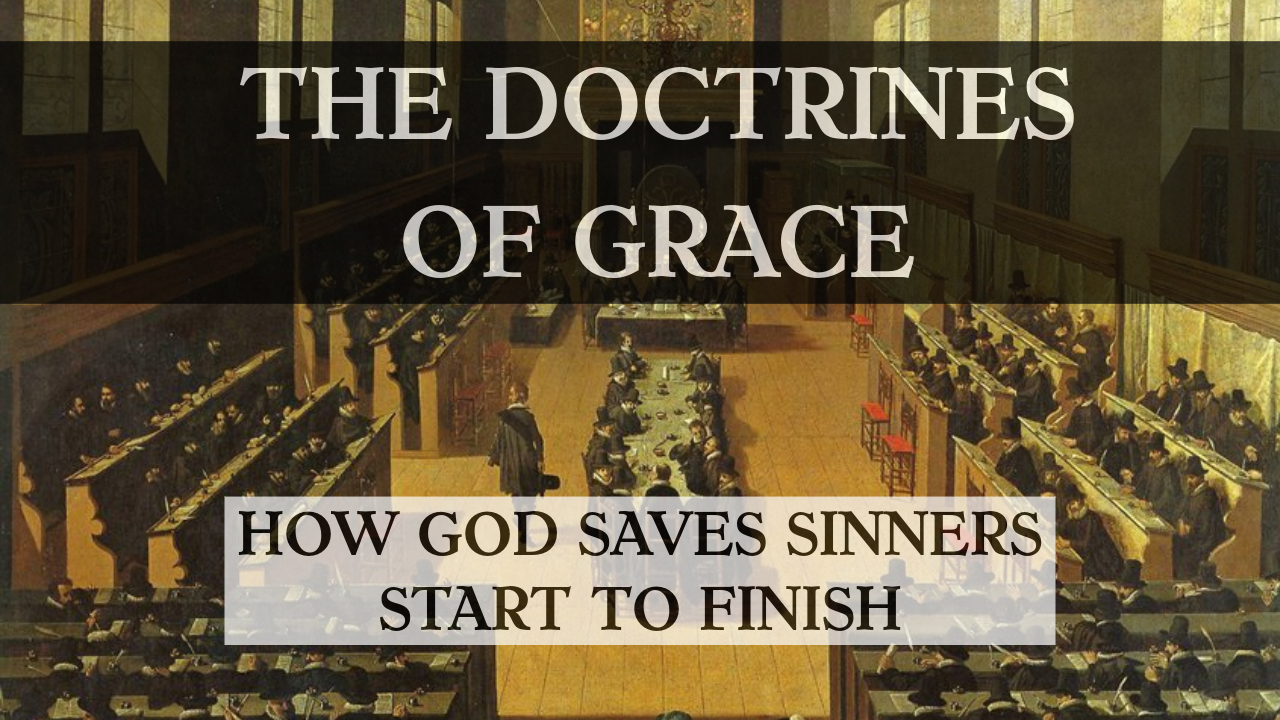
From November 1618–May 1619, pastors and theologians gathered in the Dutch city of Dordrecht for what remains the most international assembly the Reformed churches have ever held. Alongside the delegates of the Dutch churches sat representatives from Great Britain, Germany, and Switzerland—gathered around one question: what does the Bible teach about how God saves sinners? The answer the Synod of Dort gave is what we call the Canons of Dort—a “canon” being simply a rule or standard of judgment.
The Canons were written to answer a controversy. After the death of the Dutch professor Jacobus Arminius, his followers presented to the government a formal protest—a "Remonstrance"—containing five points that challenged the Reformed churches' teaching on election, Christ's death, human sin, God's grace, and the perseverance of believers. Point by point, the Synod answered from Scripture. This is why people speak of the so-called "five points of Calvinism." But strictly speaking, there is no such thing as the five points of Calvinism, only the five points of the Remonstrants and our responses. The Canons, then, are not a summary of everything we believe, but the church’s careful, biblical answer on one glorious theme: God saves sinners—start to finish.
Under four heads of doctrine (the third and fourth are treated together), the Canons confess that God graciously chose a people for himself in Christ before the foundation of the world; that Christ's death is of infinite value—sufficient for all—and savingly applied to his own; that we are sinners neither willing nor able to return to God on our own; that the Holy Spirit regenerates dead sinners in an entirely supernatural work no less powerful than creation itself; and that the God who begins this good work preserves his people to the end. These are the doctrines of grace.
Why Preach the Canons of Dort?
These are not cold decrees from an ivory tower, but written by pastors, for the pew. They insist that the gospel be announced and offered to all people without distinction. They speak tenderly to weak believers who struggle with assurance. They even comfort godly parents grieving the death of a little one. And on every page they aim at the same target: that doctrine would lead to doxology. If these doctrines teach us of grace but don’t lead us to praise the God of grace, we have not yet understood them.
Together with the Belgic Confession and the Heidelberg Catechism, the Canons of Dort form the Three Forms of Unity—the confessions of the United Reformed Churches in North America, which we at Oceanside United Reformed Church wholeheartedly believe and teach as faithful summaries of Holy Scripture. Below you will find sermon series preached through the Canons, each with full manuscripts and audio/video. Our prayer is that as you read and listen, you would not merely learn about the grace of God, but glorify the God of grace—and believe in Christ, in whom he chooses, redeems, regenerates, and keeps his people.
Dr. Daniel Hyde has preached through the Canons multiple times over the years, and each series below opens them up afresh.
For a fuller introductory guide, see Daniel R. Hyde The Canons of Dort: A Guide
For a short article, see Daniel R. Hyde Why I Love the Canons of Dort
For a commentary through the Canons, see Daniel R. Hyde, Grace Worth Fighting For: Recapturing the Vision of God’s Grace in the Canons of Dort (Davenant Institute, 2019)
The Doctrines of Grace: How God Saves Sinners—Start to Finish (2022)
Five sermons preached in the evening service from November–December 2022, following the Canons' outline, on how God save sinners from start to finish from election, to Christ’s death, humanity’s sin, the Holy Spirit’s regeneration, all the way to the perseverance of the saints. These doctrines of grace open to us the love of God and Christian experience.